
Coronary Angioplasty
Coronary Angioplasty
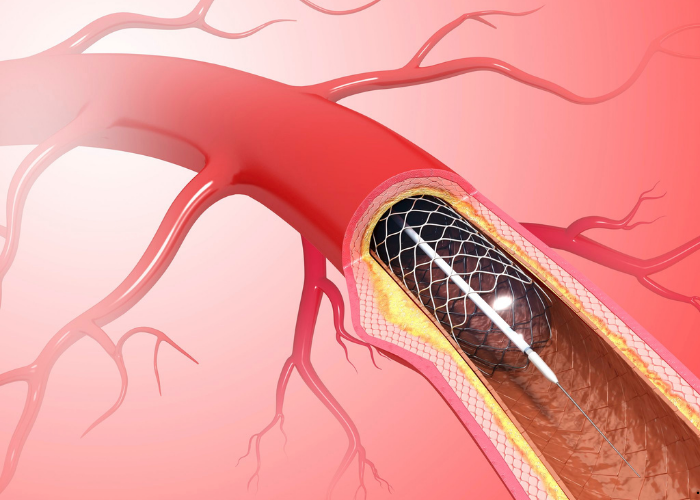
Coronary angioplasty is a procedure used to open clogged heart arteries.
It involves inflating a small balloon to widen the artery and restore blood flow.
Often, a stent is placed to keep the artery open long-term.
Why Coronary Angioplasty is Performed
Coronary angioplasty is typically done when one or more coronary arteries are significantly narrowed or blocked, restricting blood flow to the heart.
This can lead to chest pain (angina), shortness of breath, or even a heart attack.
During the procedure, a catheter with a small balloon at its tip is inserted through the groin or wrist and guided to the blockage.
Once in position, the balloon is inflated to compress the plaque against the artery wall.
In many cases, a stent (a small mesh tube) is placed to keep the artery open permanently.
Angioplasty is a less invasive alternative to open-heart surgery and usually has a quicker recovery time.
It improves symptoms, enhances quality of life, and reduces the risk of heart attacks.
It may also be performed as an emergency treatment during a heart attack.
Patients are monitored for a few hours and often return home within a day.
Lifestyle changes and medications are typically prescribed after the procedure to prevent re-narrowing of the arteries.
- Restores normal blood flow
- Reduces chest pain
- Minimally invasive procedure
- Quick recovery time
- Often combined with stenting
- Helps prevent heart attacks

Head of Department, Cardiology Services, Suburban Diagnostics India Private Limited.
Make Appointment
- 3 PM - 5 PM , Monday - Friday
Copyright @2025. All Right Reserved | Designed By Rebecca Digital