
TAVI (Transcatheter Aortic Valve Implantation)
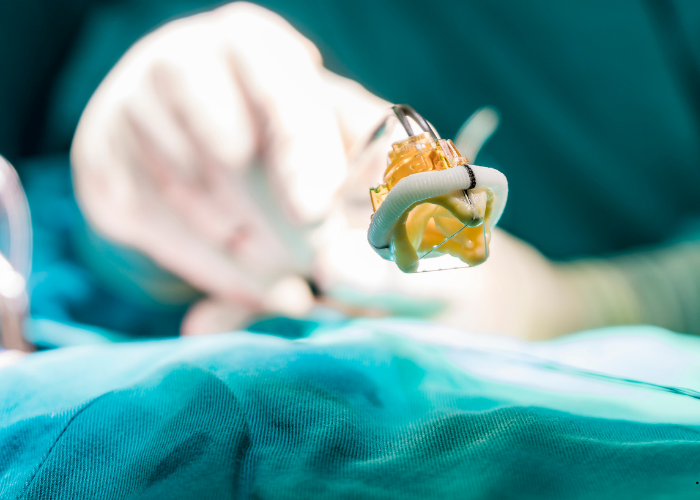
TAVI (Transcatheter Aortic Valve Implantation)
TAVI is a minimally invasive procedure used to replace a narrowed aortic valve that fails to open properly (aortic stenosis).
A new valve is inserted via a catheter, usually through the leg artery, without open-heart surgery.
It is ideal for elderly or high-risk patients who cannot undergo traditional valve replacement.
Why TAVI is Done
TAVI is performed in patients suffering from severe aortic stenosis, a condition where the heart’s aortic valve becomes narrowed and restricts blood flow.
Symptoms may include chest pain, breathlessness, fatigue, and fainting.
Traditional valve replacement requires open-heart surgery, which poses higher risks for older patients or those with other health conditions.
In the TAVI procedure, a catheter is inserted through the femoral artery (in the leg) and guided to the heart.
A collapsible replacement valve is delivered through the catheter and expanded within the diseased valve.
Once in place, it takes over the function of regulating blood flow from the heart to the body.
The procedure is done under local anesthesia with mild sedation, and recovery is much faster than open surgery.
It significantly improves symptoms and survival in patients with severe aortic stenosis.
TAVI can restore quality of life with lower procedural risk and hospital stay.
Follow-up includes regular monitoring and medication management.
- Replaces narrowed aortic valve
- Ideal for high-risk patients
- Non-surgical and cathMinimally invasive procedureeter-based
- Faster recovery than surgery
- Improves quality of life
- Performed under local anesthesia

Head of Department, Cardiology Services, Suburban Diagnostics India Private Limited.
Make Appointment
- 3 PM - 5 PM , Monday - Friday
Copyright @2025. All Right Reserved | Designed By Rebecca Digital